types of vitamins
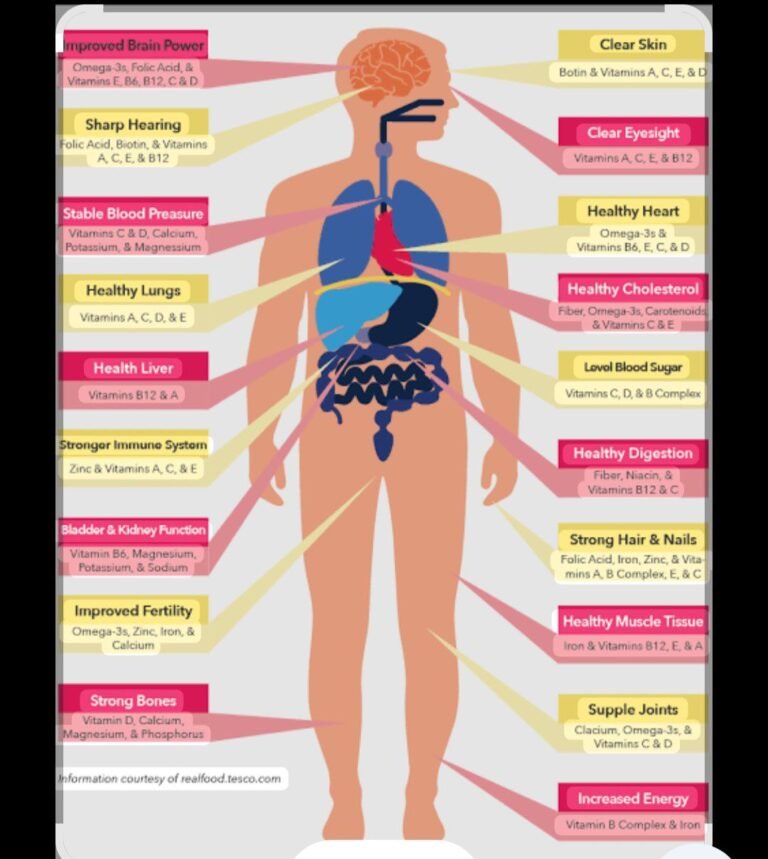
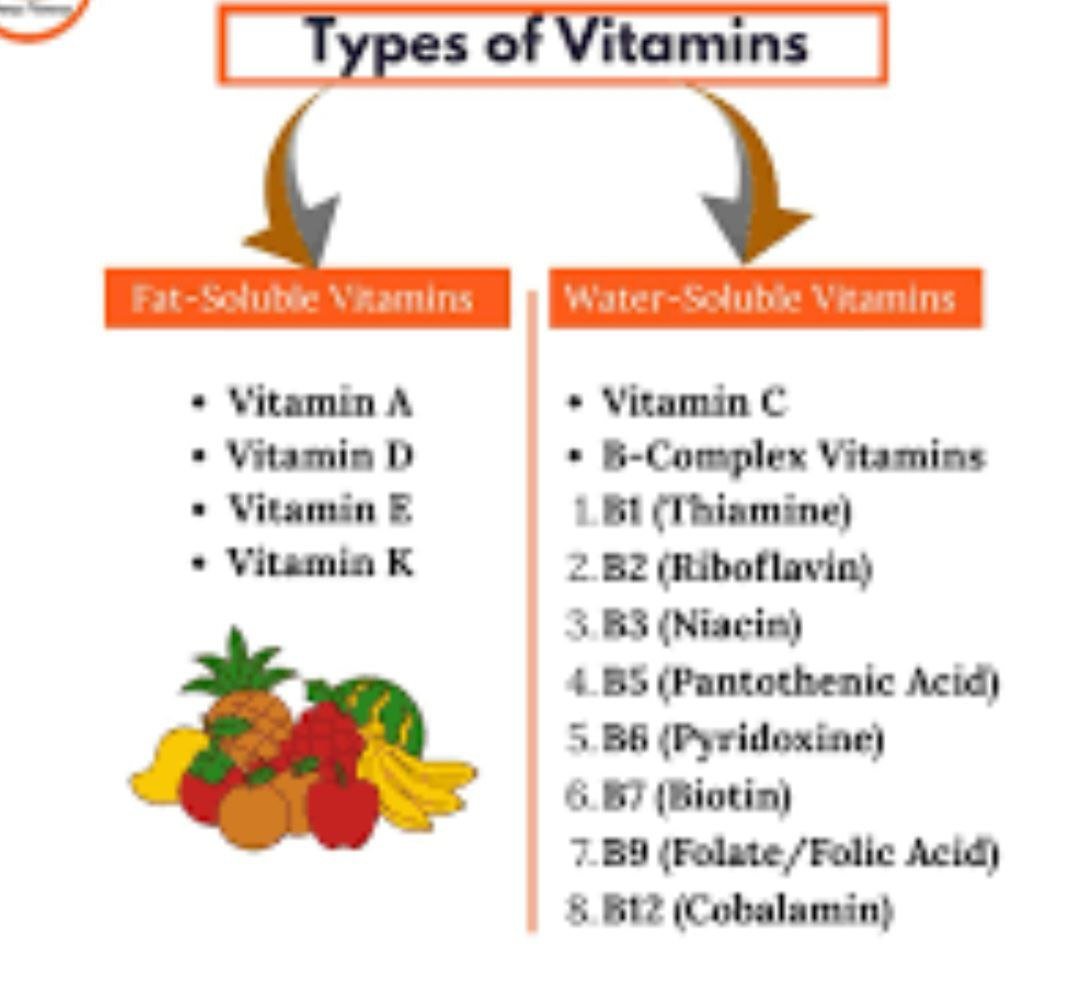
Vitamins are essential organic compounds that the body needs in small amounts for various functions. They are classified into two main categories: water-soluble and fat-soluble vitamins
Water-Soluble Vitamins:
Vitamin B1 (Thiamine): Important for energy metabolism and nerve function.
Vitamin B2 (Riboflavin): Involved in energy production and cellular function.
Vitamin B3 (Niacin): Supports metabolism and DNA repair.
Vitamin B5 (Pantothenic Acid): Aids in hormone production and metabolism.
Vitamin B6 (Pyridoxine): Essential for amino acid metabolism and neurotransmitter synthesis.
Vitamin B7 (Biotin): Important for fatty acid synthesis and glucose metabolism.
Vitamin B9 (Folate/Folic Acid): Crucial for DNA synthesis and during pregnancy for fetal development.
Vitamin B12 (Cobalamin): Important for red blood cell formation and neurological function.
Vitamin C (Ascorbic Acid): Antioxidant that supports the immune system and collagen synthesis.
Fat-Soluble Vitamins:
Vitamin A: Essential for vision, immune function, and skin health.
Vitamin D: Important for calcium absorption and bone health; often synthesized through sunlight exposure.
Vitamin E: Acts as an antioxidant, protecting cells from oxidative damage.
Vitamin K: Essential for blood clotting and bone health
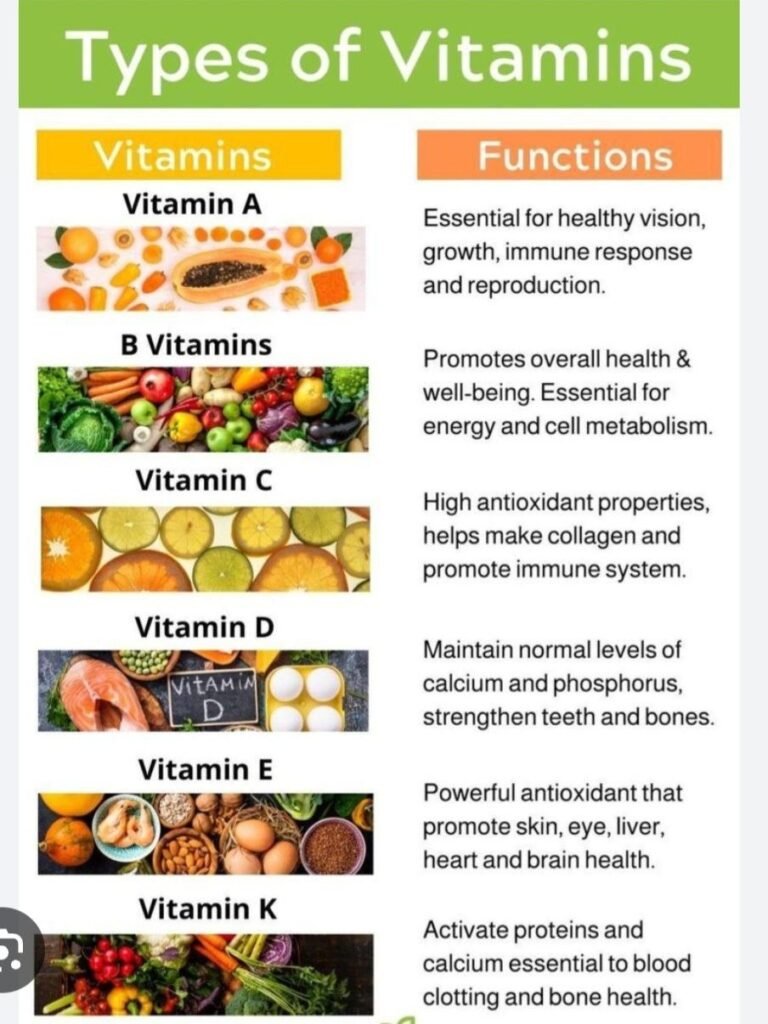
Each vitamin plays unique roles in maintaining health, and deficiencies can lead to various health issues. A balanced diet typically provides adequate amounts of these vitamins