
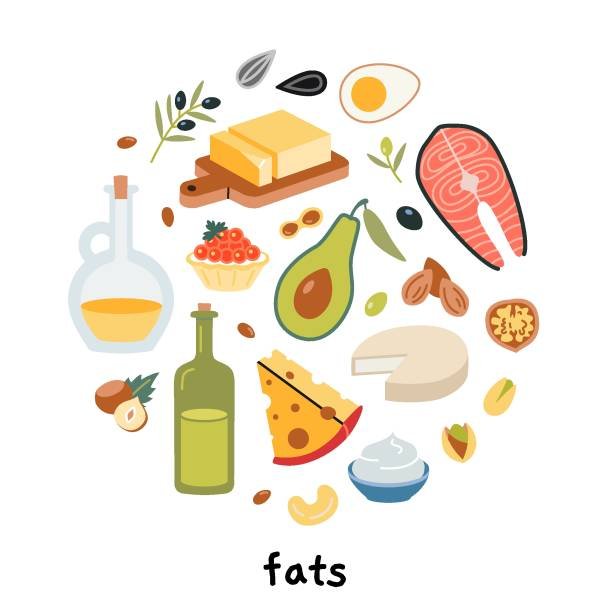
fats and its type
Fats one of the three main macronutrients (alongside carbohydrates and proteins).
What Are Fats?
Fats, also known as lipids, are organic molecules made up of carbon, hydrogen, and oxygen. They are a concentrated source of energy (providing 9 calories per gram, more than double that of carbs or proteins) and are essential for many vital bodily functions.
Main Types of Dietary Fats
Dietary fats are primarily categorized by their chemical structure, which affects their health impact.
- Unsaturated Fats (Generally “Healthy”)
Characteristics: Liquid at room temperature. Chemically, they have one or more double bonds in their fatty acid chains.
Sources: Plant oils (olive, canola, avocado), nuts, seeds, avocados, and fatty fish.
Subtypes:
Monounsaturated Fats (MUFAs): E.g., olive oil, avocados. Support heart health.
Polyunsaturated Fats (PUFAs): Include essential fatty acids your body can’t make.
Omega-3: Found in fatty fish (salmon, mackerel), flaxseeds, walnuts. Crucial for brain function and reducing inflammation.
Omega-6: Found in vegetable oils (soybean, corn). Needed in balance with Omega-3.
- Saturated Fats (Limit Intake)
Characteristics: Solid at room temperature. No double bonds in their chemical structure.
Sources: Animal products (red meat, butter, cheese, lard), coconut oil, and palm oil.
Health Note: While necessary in small amounts, excessive intake can raise LDL (“bad”) cholesterol, increasing heart disease risk. Moderation is key.
- Trans Fats (Avoid)
Characteristics: Artificially created through hydrogenation (adding hydrogen to liquid oils to make them solid). Also occur naturally in small amounts in some animal products.
Sources: Historically in fried foods, margarine, shortening, and many processed snacks (cookies, crackers). Now largely banned or restricted in many countries.
Health Note: The worst type for health. They significantly raise LDL cholesterol and lower HDL (“good”) cholesterol, sharply increasing the risk of heart disease.
Why Are Fats Essential?
Despite their sometimes negative reputation, fats are crucial for:
Energy Storage: Storing excess energy for later use.
Cell Structure: Forming the membranes (outer layer) of every cell in your body.
Hormone Production: Building blocks for sex hormones (like estrogen and testosterone) and other essential hormones.
Vitamin Absorption: Enabling the absorption of fat-soluble vitamins (A, D, E, and K).
Insulation & Protection: Cushioning vital organs and insulating the body to maintain temperature.
Brain Health: About 60% of your brain is made of fat. Essential fatty acids are critical for cognitive function.
NB. Not all fats are created equal. A healthy diet should:
Emphasize unsaturated fats (especially omega-3s).
Limit saturated fats.
Avoid artificial trans fats completely.
Fats are not the enemy—they are a vital nutrient. The goal is to choose the right kinds and consume them in appropriate amounts as part of a balanced diet.



It’s perfec
Thank you