Vitamin k
Vitamin K is a vital, fat-soluble vitamin that plays a crucial role in several bodily functions, most notably blood clotting and bone health.
Here’s a breakdown of its key aspects:
Types of Vitamin K:
Vitamin K1 (Phylloquinone):
Found primarily in plants, especially green leafy vegetables.
It’s the main dietary form of vitamin K.
Primarily involved in blood coagulation.
Vitamin K2 (Menaquinone):
Found in fermented foods (like natto, some cheeses), animal products (meat, eggs, dairy), and also produced by bacteria in the gut.
There are various subtypes of K2, denoted as MK-4 through MK-13, with MK-4 and MK-7 being the most studied.
Plays a significant role in calcium metabolism, directing calcium to bones and teeth, and preventing its accumulation in soft tissues like arteries and kidneys.
Key Functions:
Blood Coagulation (Clotting): This is vitamin K’s most well-known function. It’s essential for the synthesis of several clotting factors (proteins) in the liver, including prothrombin (Factor II), Factor VII, Factor IX, and Factor X. Without adequate vitamin K, blood cannot clot properly, leading to excessive bleeding.
Bone Health: Vitamin K activates proteins involved in bone mineralization, such as osteocalcin. These proteins help bind calcium to the bone matrix, contributing to bone density and strength. Adequate vitamin K intake is associated with a reduced risk of fractures and osteoporosis.
Cardiovascular Health: Vitamin K2, in particular, helps prevent the calcification of arteries by activating matrix Gla protein (MGP), which inhibits calcium deposition in blood vessel walls. This can contribute to maintaining arterial flexibility and reducing the risk of cardiovascular disease.
Sources of Vitamin K:
Vitamin K1:
Green leafy vegetables: Kale, spinach, collard greens, turnip greens, Swiss chard, parsley, romaine lettuce.
Broccoli, Brussels sprouts.
Vegetable oils (soybean, canola).
Vitamin K2:
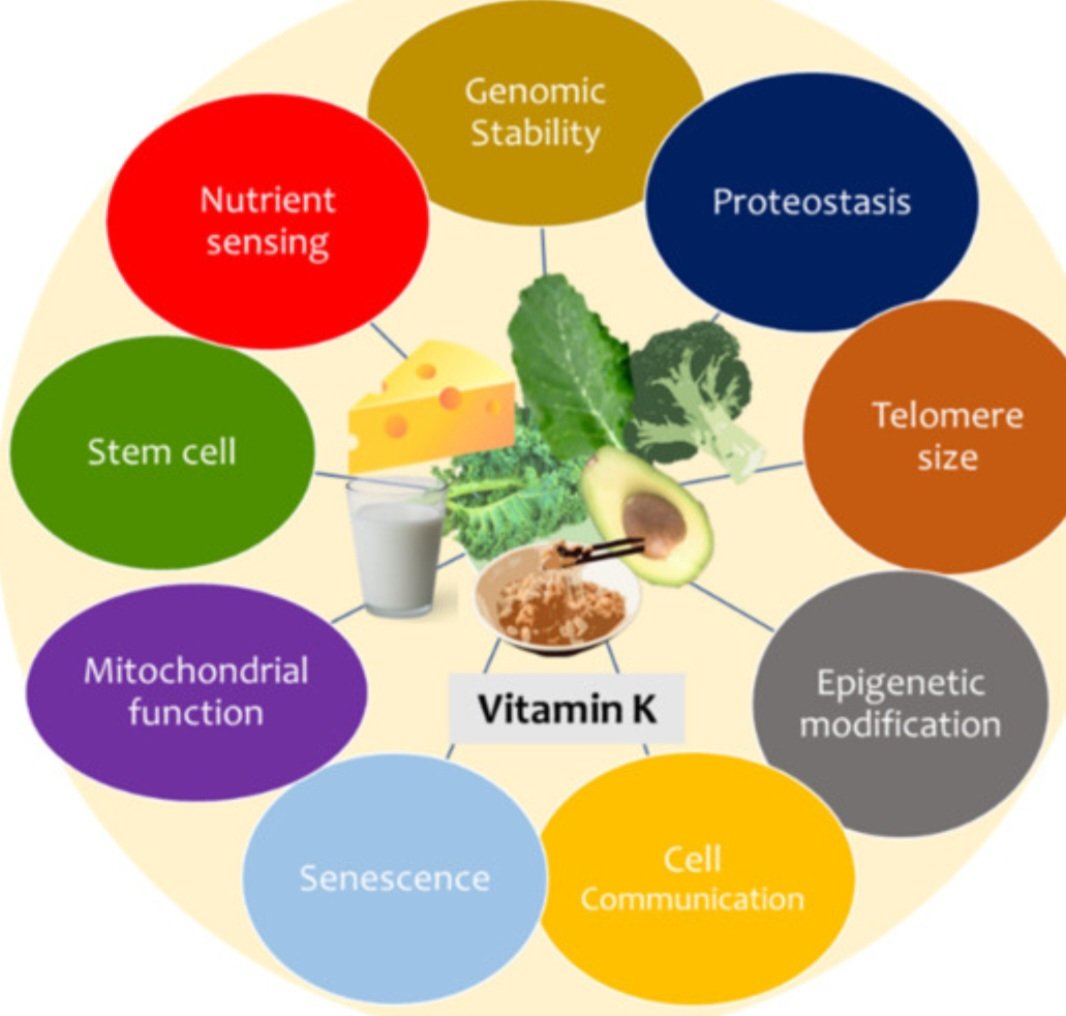
Natto (fermented soybeans) is an exceptionally rich source of MK-7.
Some cheeses (Gouda, Brie).
Egg yolks.
Chicken liver and dark meat chicken.
Butter.
Sauerkraut.
Fermented dairy products.
Gut bacteria also produce some K2, but the amount absorbed and utilized can vary.
Deficiency Symptoms:
Vitamin K deficiency is rare in healthy adults but can occur in certain circumstances. Symptoms include:
Easy bruising.
Excessive bleeding from wounds, punctures, or surgical sites.
Blood clots under the nails.
Bleeding gums or nosebleeds.
Blood in urine or stool.
Heavy menstrual bleeding.
Newborns are routinely given a vitamin K shot at birth because they have low levels at birth and are at risk for a serious bleeding disorder called Vitamin K Deficiency Bleeding (VKDB).
Risk Factors for Deficiency:
Malabsorption disorders (e.g., celiac disease, cystic fibrosis, Crohn’s disease).
Liver disease.
Long-term use of antibiotics (which can disrupt gut bacteria).
Certain medications, particularly blood thinners like warfarin (Coumadin), which antagonize vitamin K’s action.
Toxicity and Interactions:
Toxicity: Natural forms of vitamin K (K1 and K2) have a very low potential for toxicity, even at high doses, and there is no established Upper Limit (UL).
Drug Interactions: The most significant interaction is with warfarin (Coumadin), an anticoagulant. Warfarin works by interfering with vitamin K’s action. Therefore, individuals on warfarin need to maintain a consistent intake of vitamin K to avoid fluctuations that could affect the medication’s effectiveness and lead to dangerous bleeding or clotting. Other medications that can interfere with vitamin K absorption include certain anticonvulsants and bile acid sequestrants.
In summary, vitamin K is essential for maintaining proper blood clotting, strong bones, and healthy arteries. Ensuring adequate intake through a balanced diet rich in green leafy vegetables and some fermented or animal products is important for overall health